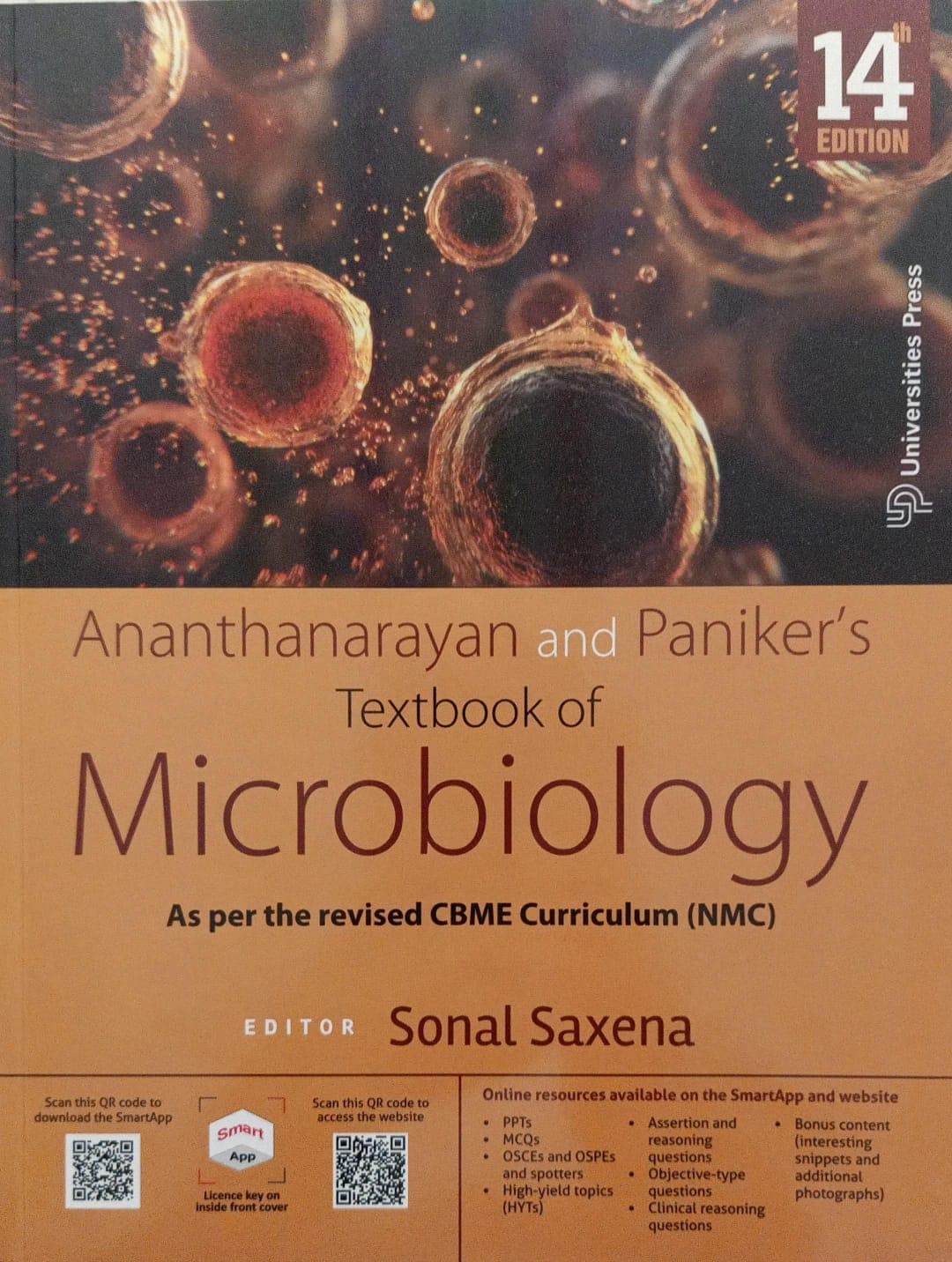
Sonal Saxena
Ananthanarayan and Paniker’s Textbook of Microbiology 14th/2026
ISBN 9788169487009
₹1,197₹1,595
Inclusive of all taxesOnly 1 left in stock
Cells are the basic unit of life. In the modern world, they are the smallest known world that performs all of life's functions. All living organisms are either single cells, or are multicellular organisms composed of many cells working together. Cells are the smallest known unit that can accomplish all of these functions. Defining characteristics that allow a cell to perform these functions include: A cell membrane that keeps the chemical reactions of life together, at least one chromosome, composed of genetic material that contain the cell's blueprints and software cytoplasm—the fluid inside the cell, in which the chemical processes of life occur. Thus, cells are the basic building blocks of living things. The human body is composed of trillions of cells, all with their own specialised function. Cells are the basic structures of all living organisms. Cells provide structure for the body, take in nutrients from food and carry out important functions. Cells group together to form tissues, which in turn group together to form organs, such as the heart and brain. Our cells contain a number of functional structures called organelles. These organelles carry out tasks such as making proteins, processing chemicals and generating energy for the cell. The nucleus is based at the centre of the cell and is the 'control room' for the cell. The genome is found within the nucleus.
It also includes viruses and human cancer.
Diagrams, figures, tables and index supplement the text. All topics have been covered in a cogent and lucid style to help the reader grasp the information quickly and easily
More titles readers browse in Microbiology / Immunology