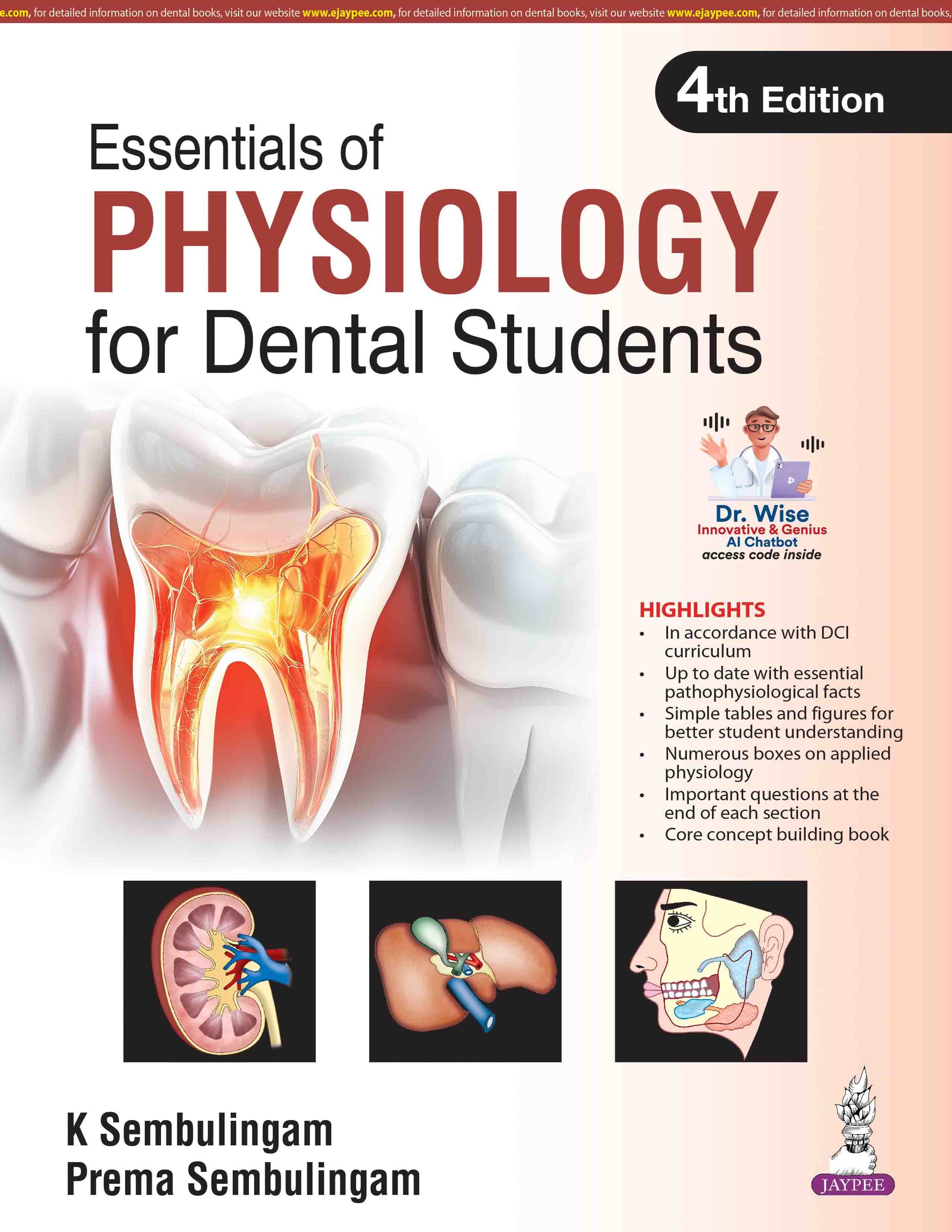
K Sembulingam, Prema Sembulingam
Essentials of Physiology for Dental Students 4th/2026
ISBN 9789366160825
₹920₹1,150
Inclusive of all taxesOnly 2 left in stock
The first edition of this book comprises of four sections. The first unit emphasizes on the morphology and variation of teeth as a part of dental anatomy. The Dental histology describes the development of teeth and associated tissues including enamel, dentin, pulp, cementum and periodontal ligament. It also includes the physical and chemical properties, histological appearance and clinical considerations of the same. Shedding, eruption of teeth, occlusion, and muscles of mastication are also dealt with.
Salivary glands, oral mucosa, maxillary sinus, temporomandibular joint and tissue preparation comprise the rest of the second unit. The third unit of embryology explains the development of the oral and paraoral structures with details of general embryology from fertilization onwards. Physiology is the fourth unit which constitutes important topics related to year one of dentistry that include mastication, chewing cycle, saliva and calcium and phosphorus metabolism.
• Flowcharts for topics that involve development, processes and formation of tissues and organs • Textboxes for faster revision • Good-resolution images • Important topics and aspects in chapters given in bulleted form for easy memorization for theory and viva exams • Synopsis at the end of the chapter for last minute overview of the chapter • Line diagrams for easy reproduction in the exams • Review questions to test the student’s skills regarding the understanding of the subject • Clinical considerations at the end of every chapter to help the undergraduate students apply their basic knowledge in the future clinical years
More titles readers browse in Oral Anatomy, Physiology, Occlusion